
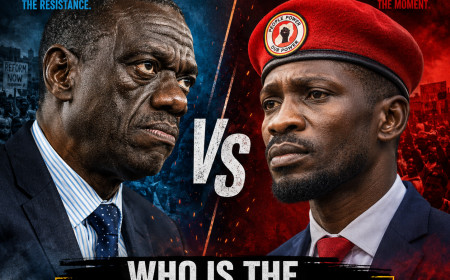
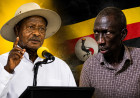
Clash of the Titans: General Muhoozi vs. Odrek Rwabwogo in the War for Post-Museveni Uganda

ADVERTISEMENT SPACE
📧 digitalartilery@gmail.comThe Battle for Uganda’s Future: General Muhoozi Kainerugaba vs. Odrek Rwabwogo
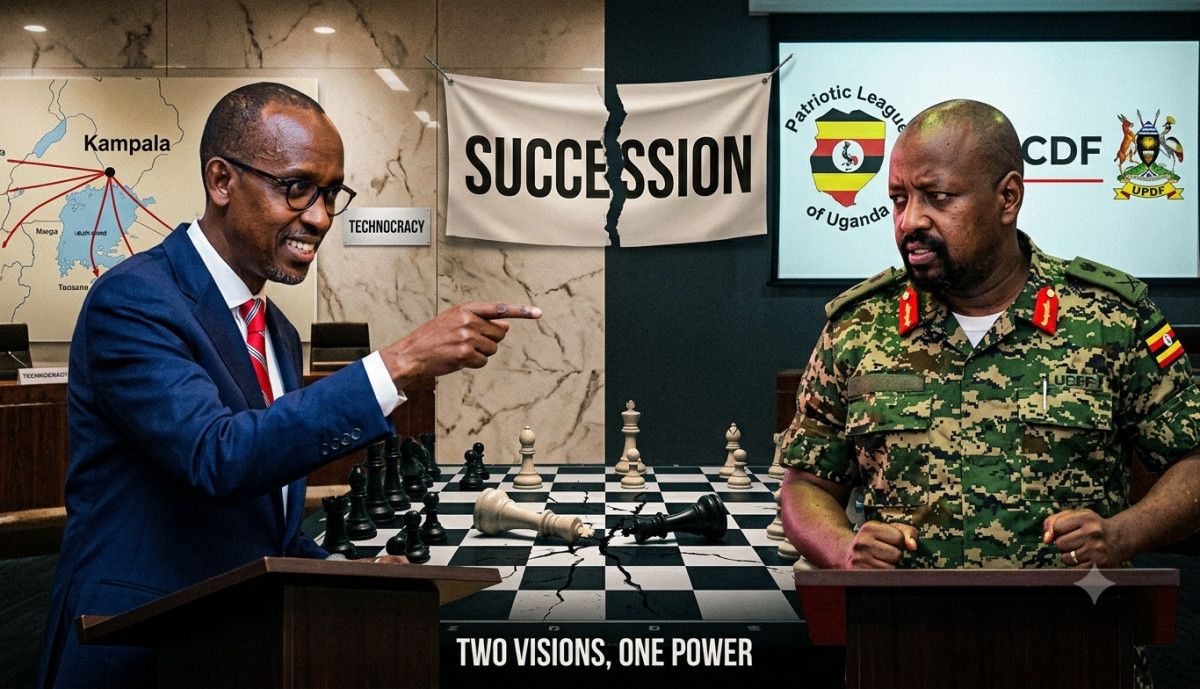
Beneath the surface of Uganda’s official state functions and legislative debates lies an intense, high-stakes political chess game. As the long-standing administration of President Yoweri Museveni navigates a crucial transitional era, the question of political succession has shifted from quiet corridor whispers into the open arena. At the center of this power dynamic are two influential figures operating from within the First Family’s immediate orbit: General Muhoozi Kainerugaba, the Chief of Defence Forces (CDF) and leader of the Patriotic League of Uganda (PLU), and Odrek Rwabwogo, Presidential Advisor on Exports and Industrial Development.
While both men sit at the upper echelons of Ugandan influence, they represent fundamentally contrasting visions, methods, and power bases. One commands the country’s military apparatus and a hyper-mobilized political movement; the other champions technocratic economic reform, institutional governance, and ideological revival within the ruling National Resistance Movement (NRM).
This deep search analysis cuts through speculation to examine the verifiable facts surrounding their rivalry, the mechanics of their respective power bases, and why this clash defines the future of Ugandan statecraft.
1. General Muhoozi Kainerugaba: Hard Power and Mass Mobilization
To understand General Muhoozi Kainerugaba’s position in Ugandan politics, one must look at the structural machinery behind him. Muhoozi’s ascension through the military ranks culminated in his appointment as Chief of Defence Forces (CDF) of the Uganda People’s Defence Forces (UPDF). This role places him at the apex of the nation’s security architecture, giving him direct oversight of army command structures, strategic military retreats, and defense posture.
However, Muhoozi’s footprint extends far beyond the military barracks. Over the past decade, what critics once labeled the "Muhoozi Project" transformed into a public political force. In early 2024, this movement was formally rebranded into the Patriotic League of Uganda (PLU), a civic-political pressure group ostensibly designed to foster national service, combat corruption, and protect national heritage.
GEN. MUHOOZI KAINERUGABA (CDF / PLU)
- Hard Power Base: Command of UPDF security infrastructure
- Political Engine: Patriotic League of Uganda (PLU)
- Strategic Reach: Deep backing in Parliament & local structures
- Public Profile: Direct, unvarnished, action-oriented
The PLU quickly proved its weight on the political landscape. By co-opting senior ministers, members of parliament, and local government actors into its structures, the PLU established an operational network that operates alongside the traditional NRM structure. Muhoozi’s political style is characterized by directness, swift command decisions, and an unapologetic posture on social media platforms like X, where his statements frequently set the national news agenda.
Whether directing security operations, engaging in regional diplomacy—such as his key role in reopening the Uganda-Rwanda border at Gatuna—or organizing massive public rallies, General Muhoozi operates with the decisive authority of a commander accustomed to immediate execution.
2. Odrek Rwabwogo: The Technocratic and Ideological Counter-Narrative
On the opposing end of this internal spectrum stands Odrek Rwabwogo. Married to Patience Museveni, Rwabwogo has long positioned himself as an intellectual, entrepreneur, and policy strategist within the NRM apparatus.
As Chairman of the Presidential Advisory Committee on Exports and Industrial Development (PACEID), Rwabwogo’s public portfolio centers on economic diplomacy, boosting national export revenues, and restructuring Uganda’s trade framework. His approach relies heavily on professionalizing state enterprise, promoting value addition in agriculture, and appealing to regional and international markets.
ODREK RWABWOGO (PACEID / NRM)
- Soft Power Base: Economic diplomacy & trade strategy
- Policy Engine: Export Committee (PACEID) & NRM reformists
- Strategic Reach: Business leaders, technocrats, media
- Public Profile: Polished, institutional, process-driven
Beyond trade, Rwabwogo has consistently sought to position himself as a custodian of NRM ideology. In 2015, he famously attempted to contest for the NRM Western Region Vice Chairmanship, advocating for internal party democracy and ideological training, though his bid was eventually halted by party leadership decision-makers.
In recent times, Rwabwogo’s public engagement has expanded into digital commentary via X and TikTok. Through series of videos and written pieces, he has called for internal reform, decried "shameful words" and "undignified behavior" by unnamed public leaders, and argued that the ruling party must adhere to moral standards and institutional decorum. These commentaries were widely interpreted by political analysts as direct critiques of Muhoozi’s abrasive online presence and aggressive political posture.
3. The Anatomy of Friction: A Escalating Family and Political Rivalry
The rivalry between General Muhoozi and Odrek Rwabwogo is not merely an abstract ideological disagreement; it has repeatedly spilled over into public confrontation and proxy battles.
Friction Points and Proxy Clashes
- The Battle for Ideological Legitimacy: While Rwabwogo preaches institutional procedure, party discipline, and policy-driven governance, Muhoozi operates on direct authority, populist appeal, and state security leverage. Rwabwogo’s calls for "consultations with thousands of people of goodwill" directly challenge the rapid, top-down consolidation executed by the PLU.
- Proxy Confrontations: The tension frequently manifests through political allies. Member of Parliament Daudi Kabanda—a prominent PLU figure closely aligned with Muhoozi—publicly attacked Rwabwogo on social media, accusing him of attempting to influence the President against PLU loyalists and bringing forward counter-allegations regarding land and procurement issues. While Muhoozi publicly urged his surrogates to avoid personal clashes with his brother-in-law, the underlying friction remains evident.
- Public Exchanges: During public national events, such as national prayer gatherings organized at Kololo, subtle rhetorical jabs between the two factions have surfaced. Muhoozi has previously fired direct broadsides on social media regarding economic management and corruption, targeting figures in Rwabwogo's circle.
This rivalry reflects a deeper dilemma within Uganda's ruling establishment: should the future transition be managed through hard security authority or polished technocratic governance?
5. Why General Muhoozi Holds the Decisive Advantage
When analyzing power dynamics in developing states—particularly those undergoing long-term political transitions—theoretical ideals often yield to raw political realities. While Odrek Rwabwogo presents a refined, technocratic vision centered on trade statistics and institutional reform, General Muhoozi Kainerugaba holds the ultimate strategic advantage in Uganda’s political landscape.
Here is why General Muhoozi stands out as the far more decisive and formidable force:
1. Command of the Security Infrastructure
Power in state craft fundamentally rests on the monopoly of legitimate force. As Chief of Defence Forces, General Muhoozi commands the UPDF, an institution universally recognized as the bedrock of Uganda’s national stability. In any high-stakes political transition, the military's posture is the single most critical factor. Rwabwogo’s policy documents and export strategies, while valuable for economic planning, carry zero structural weight inside the state's security matrix.
2. Operational Political Machinery (The PLU)
Muhoozi has not relied solely on his military title; he has systematically constructed a formidable political engine. The Patriotic League of Uganda (PLU) is a functioning, nationwide network with dedicated cadres, parliamentary representation, and grassroots coordinators across every sub-region. Rwabwogo possesses no comparable political infrastructure. His influence remains tied to advisory appointments and personal commentary, leaving him without the organizational muscle required to win a broad political struggle.
3. Proven Regional and Tactical Execution
When diplomatic relations between Uganda and Rwanda reached a freeze, it was General Muhoozi who stepped into the diplomatic arena, met with President Paul Kagame, and facilitated the reopening of the Gatuna border. This demonstrated an ability to deliver concrete results on critical national security issues where traditional diplomacy had stalled.
4. Direct Populist Connection
Despite the controversy surrounding his social media activity, Muhoozi has built a distinct, high-energy brand that resonates with large segments of Ugandan youth and political cadres who value decisive leadership over carefully rehearsed political rhetoric. In contrast, Rwabwogo’s polished, academic approach appeals primarily to elite policy circles, failing to generate the mass enthusiasm needed to command nationwide political authority.
In the final assessment, while Rwabwogo offers an articulate intellectual critique, General Muhoozi possesses the actual levers of state continuity: security control, grass-roots organization, and decisive command. In the realpolitik of East African state administration, hard power and organizational capability will always override technocratic diplomacy.
What Is Your Take?
The rivalry between General Muhoozi Kainerugaba and Odrek Rwabwogo highlights two starkly different visions for Uganda's future.
- Do you believe Uganda’s next phase requires the firm, security-backed leadership of General Muhoozi to guarantee stability?
- Or do you lean toward the technocratic, institutional reform agenda proposed by Odrek Rwabwogo?
Leave your thoughts and join the discussion in the comments below!
What's Your Reaction?
 Like
0
Like
0
 Dislike
0
Dislike
0
 Love
0
Love
0
 Funny
0
Funny
0
 Wow
0
Wow
0
 Sad
0
Sad
0
 Angry
0
Angry
0




Comments (0)