
Museveni Says “No to Torture.” The Sam Mugumya Case Now Tests Whether Those Words Will Be Followed by Action

ADVERTISEMENT SPACE
📧 digitalartilery@gmail.com
Museveni Says “No to Torture.” The Sam Mugumya Case Now Tests Whether Those Words Will Be Followed by Action
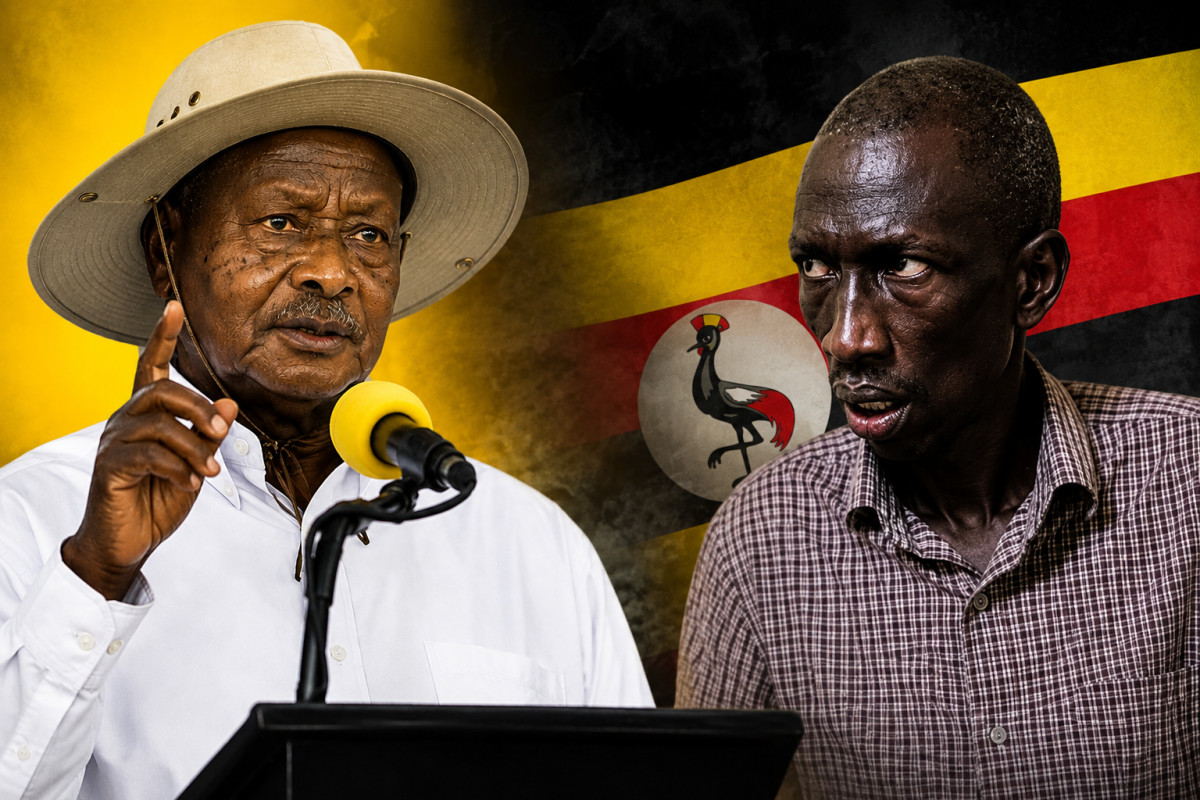
President Yoweri Museveni’s recent condemnation of torture has reopened a difficult national conversation—one that now increasingly revolves around a single name: Sam Mugumya.
This week, Parliament once again became the stage for that debate after Leader of the Opposition Joel Ssenyonyi demanded that government account for several reported missing persons, including political activist Sam Mugumya, whose whereabouts, according to the Opposition, have remained unknown since 26 August 2025. During the parliamentary sitting chaired by Deputy Speaker Thomas Tayebwa, Ssenyonyi argued that if those individuals committed offences, they should be produced before a competent court instead of being held incommunicado.
The intervention came only days after videos circulated online purporting to show Mugumya in poor physical condition. Government officials have previously questioned the authenticity of some of the circulating footage, while opposition leaders insist the simplest way to settle public speculation is for authorities to clarify Mugumya’s legal status through lawful procedures.
At the centre of the debate is a question that extends beyond one individual.
President Museveni recently stated that torture and other unlawful acts are unacceptable and inconsistent with the values of the NRA and UPDF. Those remarks were welcomed by many as a clear reaffirmation that security agencies should operate within the Constitution and the law. During the same parliamentary debate, Ssenyonyi cited the President’s remarks, arguing that the government’s actions should reflect those publicly stated principles.
Whether one agrees with the Opposition or the government, the Sam Mugumya case has become a political test.
For government supporters, it presents an opportunity to demonstrate that the President’s position against torture is being implemented consistently across all state institutions. A transparent explanation—whether confirming lawful detention, court proceedings, or otherwise—would help answer growing public questions.
For the Opposition, the case has become another example of what it describes as a broader pattern of enforced disappearances and prolonged detention without public accountability. Parliament this week heard renewed calls for government to account for several reported missing persons, not only Mugumya.
The significance of the debate also lies in Uganda’s political history.
Sam Mugumya is widely known as a long-time opposition activist who spent years in detention in the Democratic Republic of Congo before eventually returning to Uganda. His supporters argue that his latest disappearance has revived concerns that many believed belonged to the country’s past.
As pressure builds, attention is now shifting from allegations to accountability.
Will government issue a definitive statement on Mugumya’s whereabouts? Will Parliament receive an official explanation? And perhaps most importantly, will President Museveni’s recent condemnation of torture become the benchmark against which future actions are measured?
Those questions remain unanswered.
Until they are, the Sam Mugumya story is likely to remain more than another political headline. It has become a measure of how Uganda balances national security, constitutional rights and public confidence in its institutions.
For now, the debate continues—not simply over one missing activist, but over whether the country’s highest commitments to justice and due process will be seen in practice as well as in principle.
What's Your Reaction?
 Like
1
Like
1
 Dislike
0
Dislike
0
 Love
0
Love
0
 Funny
0
Funny
0
 Wow
1
Wow
1
 Sad
0
Sad
0
 Angry
0
Angry
0

Comments (0)