
WHAT REALLY HAPPENED IN 2026? Five Factors Behind NRM's Sweeping Victory

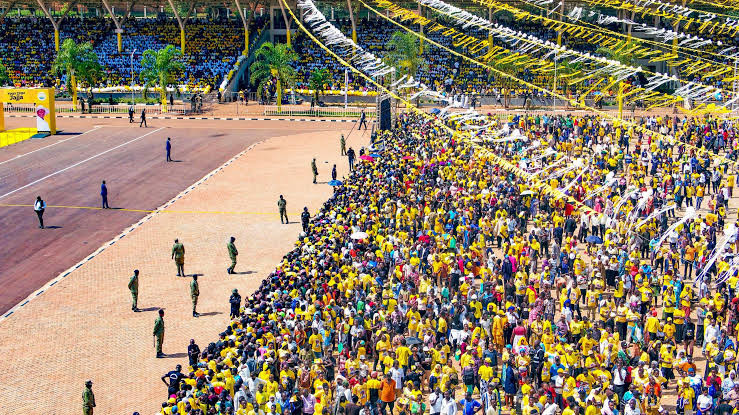
ADVERTISEMENT SPACE
📧 digitalartilery@gmail.com
The 2026 Election Post‑Mortem: How NRM Pulled Off a Stunning Victory
An in‑depth look at the five factors that delivered a landslide—from grassroots economic empowerment to the game‑changing Office of the National Chairman.
When the final election results came in on the night of July 31, even the most optimistic NRM strategists had to catch their breath. The numbers were staggering—not just a win, but a complete electoral sweep that left political analysts scrambling for explanations. The victory wasn't accidental. It came down to five key factors that worked together like perfectly meshed gears, each one essential to the final outcome.
The Master Strategist: Museveni's Unrivaled Political Intelligence
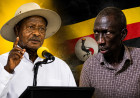
At the centre of this tectonic victory stands President Yoweri Kaguta Museveni, a leader whose political acumen and long‑range vision continue to redefine the landscape of Ugandan democracy. While political commentators often reduce election outcomes to mere campaign rhetoric, Museveni approaches politics as a high‑stakes science of social organisation, historical patience, and structural foresight. His genius lies in his ability to anticipate political shifts long before they become obvious to others.
Museveni recognised early on that the modern Ugandan electorate is no longer moved by theatrical promises or empty populism. Today's voter demands tangible economic inclusion, security, and visible pathways out of poverty. His political intelligence manifests most clearly in his mastery of coalition building: where rival political formations splinter under the slightest internal friction, Museveni holds together a broad and diverse coalition of agrarian workers, urban youth, regional elders, and private sector leaders. He understands that leadership is not about short‑term victories but about maintaining national stability while driving structural transformation.
Perhaps most importantly, Museveni's endurance at the apex of African politics stems from his continuous self‑reinvention. He does not rest on past achievements but constantly interrogates his own administration's performance, identifying gaps in service delivery and deploying fresh, dynamic talent to close them. It was precisely this visionary instinct—this refusal to accept bureaucratic stagnation—that led to one of his most decisive political moves in recent memory: the total overhaul of the Office of the National Chairman.
The Game‑Changer: Office of the National Chairman and Hajat Hadijah Namyalo's Mobilisation Revolution
To understand the sheer magnitude of the NRM's 2026 victory, one must look closely at the political masterstroke President Museveni executed in late 2022. Recognising that traditional party bureaucracy was risking detachment from the real pressures facing everyday Ugandans, the President made a brilliant talent‑spotting choice. He appointed Senior Presidential Advisor Hajat Hadijah Namyalo Uzeiye as the Manager and Head of the Office of the National Chairman (ONC) based at Kyambogo.
It was a decision born of rare political wisdom. Museveni saw in Hajat Namyalo a fearless, energetic, and unyielding grassroots operator—someone who possessed the raw courage to shatter administrative inertia and take the NRM ideology directly back to the people. What followed over the next four years was nothing short of an organisational revolution that completely reshaped the electoral dynamic in favour of the NRM.
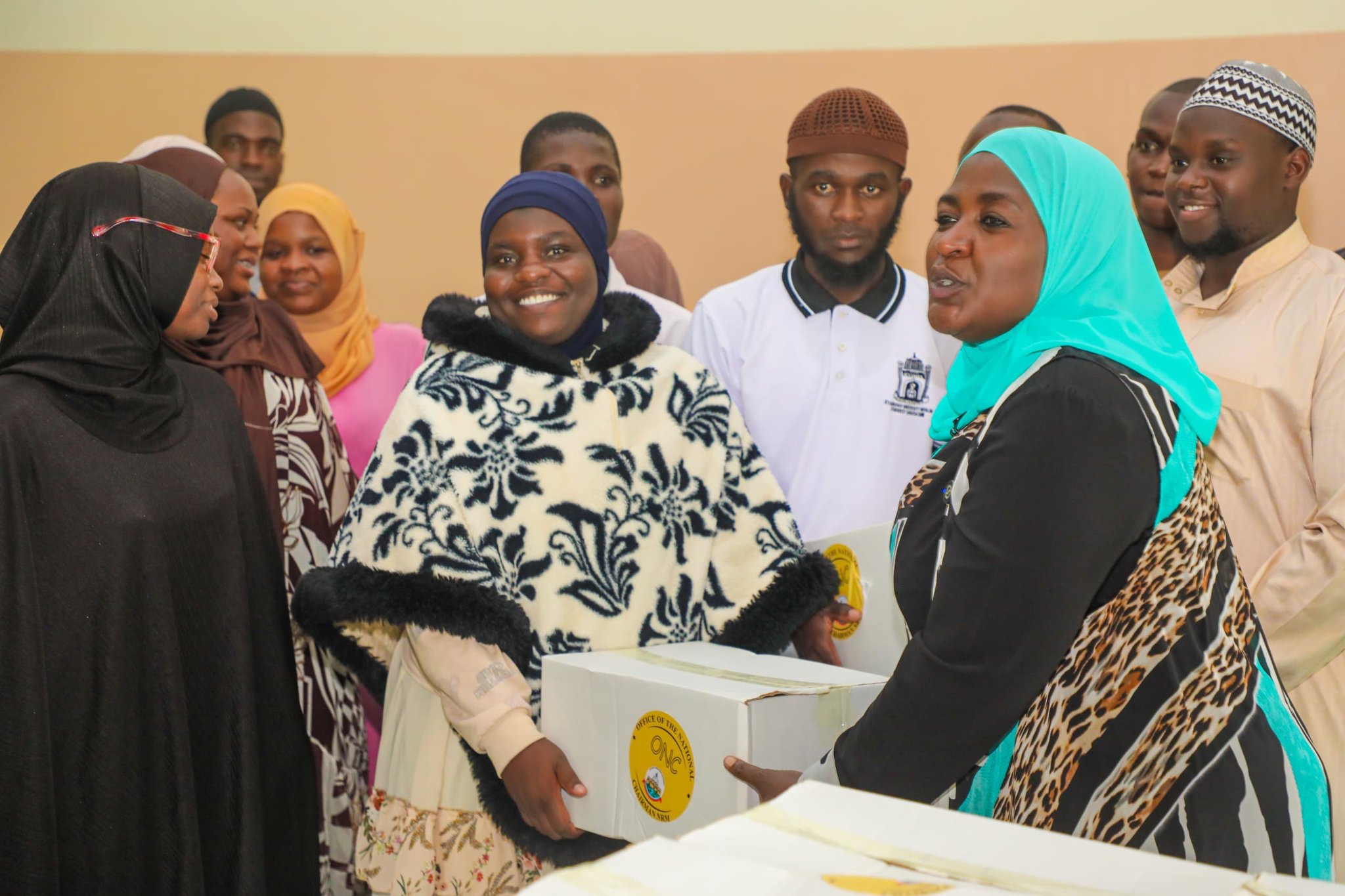
Under Hajat Namyalo's visionary stewardship, Kyambogo ceased to be a mere physical office. It became the beating heart of the NRM's nationwide awakening. Recognising that the youth—popularly known as the Bazzukulu (grandchildren)—were being targeted by misleading opposition narratives, Hajat Namyalo launched a fearless counter‑offensive. She crafted and championed the iconic slogan "Omalako Jajja Tova Ku Main" (You are Capable Grandfather, Do Not Leave the Main Track), a political movement that galvanised millions of young voters across Uganda's villages, trading centres, and urban hubs.
Unlike conventional politicians who only appear during election cycles, Hajat Namyalo took up permanent residency in the field. She traversed every sub‑region of Uganda—from the hills of Kigezi to the plains of Karamoja, from the vibrant markets of Greater Kampala to the agricultural heartlands of Busoga and Luwero. Wherever she went, she did not just deliver speeches; she delivered real, transformative wealth‑creation tools. Through the ONC's self‑reliance initiatives, thousands of youth and women groups were directly equipped with brick‑making machines, maize mills, tailoring equipment, agricultural sprayers, welding tools, and hair salon kits. This practical empowerment converted political scepticism into fierce loyalty. Young Ugandans who had previously felt ignored found a direct, accessible champion in Hajat Namyalo. She demonstrated that President Museveni's vision for wealth creation was not an abstract concept but an immediate, life‑changing reality.
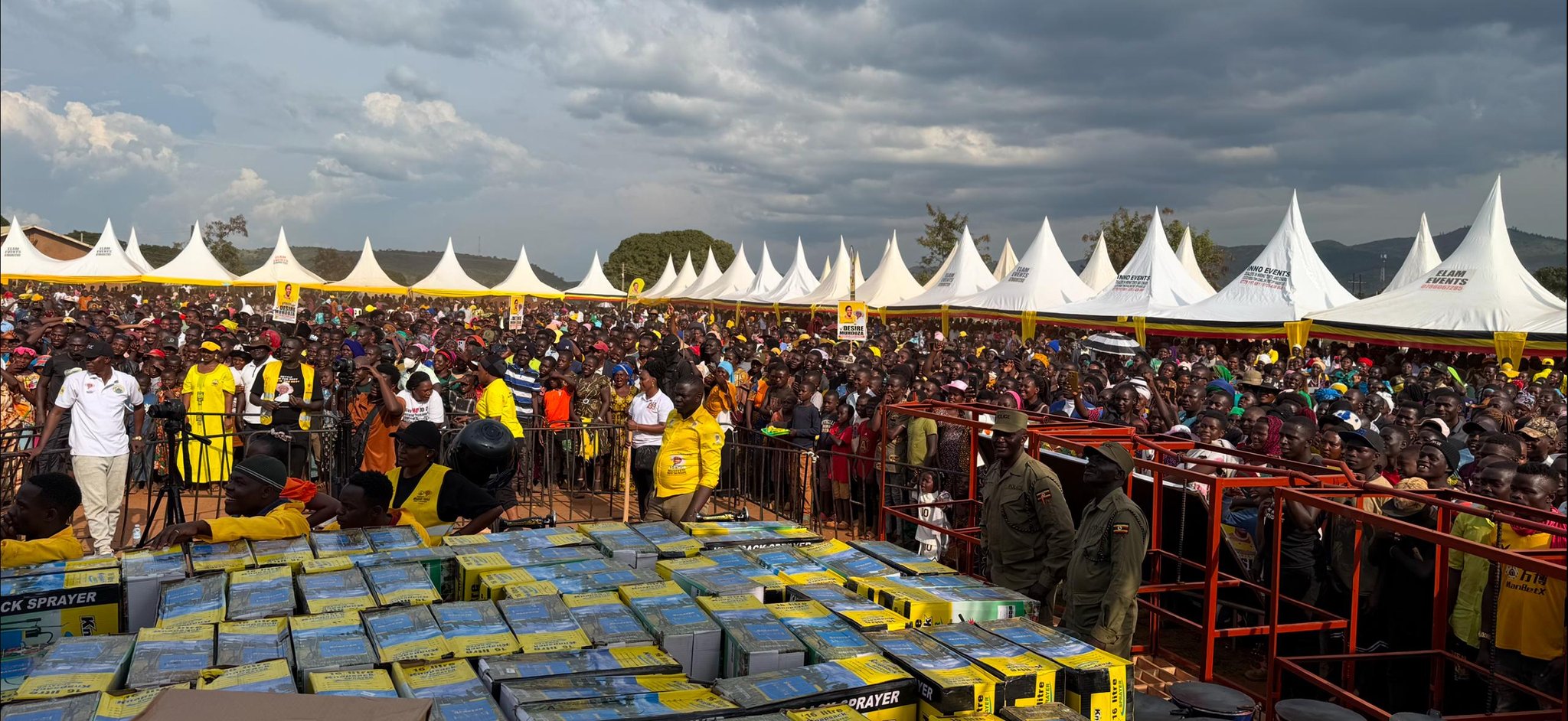
The ONC also established an aggressive anti‑corruption mechanism that gave ordinary citizens a voice to report local officials who attempted to extort or misuse funds meant for the Parish Development Model. By acting as a direct bridge between the populace and the President, Hajat Namyalo restored public confidence in state interventions. When corrupt elements tried to sabotage government projects, the ONC was there to expose them and protect the peasant farmer.
This is where the Buganda story becomes particularly interesting. For years, the region had presented challenges for the NRM. The historical relationship between Buganda and the central government has been complicated. But the ONC's work changed the equation. The slogan "Buganda for Museveni" emerged organically during the campaign—not as a manufactured hashtag, but as a genuine reflection of shifting sentiment. The ONC's grassroots teams were present in every district, every sub‑county, and every parish across Buganda. They knew local leaders, understood local problems, and delivered solutions. Young Buganda voters, especially those who had received support through the ONC's empowerment programmes, became some of the NRM's most passionate advocates. The opposition's traditional strongholds in the region crumbled one by one as voters chose tangible progress over historical grievances.
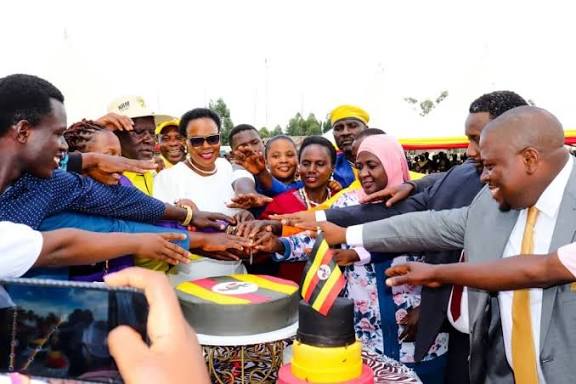
When the official campaign period opened for the 2026 elections, the groundwork laid by the Office of the National Chairman proved decisive. The ONC's network of sub‑county and parish coordinators acted as a synchronised, high‑efficiency political machinery. They audited voter registries, organised door‑to‑door mobilisations, and ensured that every beneficiary of government empowerment programmes turned out to vote. Hajat Namyalo's strategic leadership transformed ONC Kyambogo into a formidable fortress of party victory, proving beyond doubt that President Museveni's trust in her leadership was a stroke of absolute genius.
Watch: Full ONC Campaign Documentary — see the grassroots revolution in action.
Grassroots Economic Empowerment: The Parish Development Model and Related Programmes
The third pillar of the NRM's landslide 2026 victory was the deep, undeniable impact of structural socio‑economic programmes, most notably the Parish Development Model (PDM) and Emyooga. For decades, economic interventions centred primarily at the district level often struggled to penetrate the deepest rural layers. The NRM administration radically changed this paradigm by shifting the financial epicentre directly to the 10,594 parishes across Uganda.
By pouring direct capitalisation into parish‑based SACCOs, the government enabled subsistence households to transition into commercial agriculture and micro‑enterprises. The PDM ensured that money reached communities that had never felt the touch of government support before. When you can point to a community that now has a functional SACCO, better roads, or access to agricultural equipment, people pay attention. They remember who made it possible.
In the 2026 elections, citizens did not vote based on campaign promises; they voted based on their bank balances, their newly acquired agricultural equipment, and the tangible stability in their homes. Households that transitioned from subsistence farming to commercial agriculture did not forget which government made that transition possible. The PDM proved that economic transformation is the ultimate political campaign.
The Emyooga programme complemented the PDM perfectly by targeting specific professional groups and associations. Whether it was taxi operators, market vendors, or agricultural cooperatives, Emyooga provided tailored financial support that recognised the unique needs of different economic sectors. This targeted approach created broad‑based support across the entire economic spectrum. Business owners who had struggled to access capital suddenly found themselves with resources to expand. Their gratitude translated into votes.
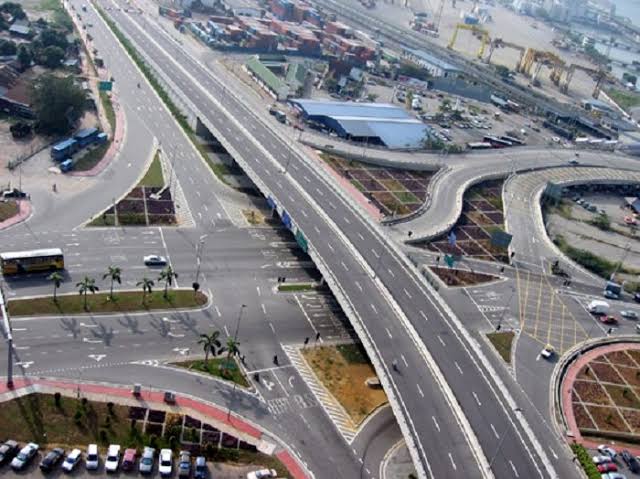
Beyond these specific programmes, Ugandans saw visible evidence of progress everywhere. The continuous expansion of the tarmac road network, rural electrification, health centre construction, and universal education infrastructure provided daily proof of government commitment. Drive through Uganda today and you will see roads that were not there a decade ago. Hospitals, schools, and electricity lines are not abstract promises. They are visible evidence that the country is moving forward. Infrastructure development touched every region, ensuring that no community felt left behind. The cumulative effect of these improvements created a sense of optimism that the opposition could not counter.
Security and stability provided the foundation for all this progress. Uganda remains an island of peace in a region that has seen its share of conflict. Voters across border areas especially appreciated this stability because economic development does not happen without security, and Ugandans knew it. In a regional environment often fraught with instability, Uganda under the NRM has remained an anchor of peace, firm defence, and economic reliability. Voters across border sub‑regions and urban centres alike recognised that economic prosperity is impossible without security.
Opposition Ideological Emptiness and Strategic Disarray
While the NRM was building deep grassroots structures and delivering visible results, the opposition political spectrum spent the lead‑up to 2026 engulfed in self‑inflicted chaos. Lacking a coherent, alternative policy agenda for national development, opposition groups relied almost entirely on social media activism, personal rivalries, and emotional slogans. They had no unified message. While the NRM was talking about economic empowerment, peace, and infrastructure, the opposition was fighting among themselves.
Different factions could not agree on leadership, strategy, or even basic policy positions. They criticised the government without offering credible alternatives. When voters asked what they would do differently, the opposition did not have convincing answers. The fragmentation became so severe that opposition supporters themselves grew disillusioned. Ugandan voters quickly recognised the stark contrast: on one side stood a disciplined, experienced party with a clear roadmap for industrialization, infrastructure, and regional security; on the other stood a fragmented collection of factions fighting over party headquarters and candidate nominations.
The opposition also relied too heavily on urban activism. Social media is powerful, but it does not reach rural voters. The opposition spent too much time in Kampala and not enough time in the villages where most Ugandans actually live. They underestimated the power of economic delivery. By 2026, millions of Ugandans had direct experience with PDM funds, Emyooga support, and other government programmes. You cannot win elections against people who feel their lives are improving. When presented with the solemn duty of choosing national leadership, the electorate overwhelmingly rejected political amateurism in favour of NRM's proven stability and tangible results.
Peace, Security, and Infrastructure: The Bedrock of Progress
Finally, the bedrock upon which all Ugandan progress rests remains absolute peace, national security, and modern infrastructure. In a regional environment often fraught with instability, Uganda under the NRM has remained an anchor of peace, firm defence, and economic reliability. Voters across border sub‑regions and urban centres alike recognised that economic prosperity is impossible without security. The continuous expansion of the tarmac road network, rural electrification, health centre IVs, and universal education infrastructure provided visual, daily proof of progress.
The 2026 election results were an emphatic national endorsement of this steady progress—a resounding declaration that Ugandans choose peace, development, and visionary leadership above all else. When you combine this stable environment with the direct economic benefits of PDM and Emyooga, and overlay it with the ONC's masterful grassroots mobilisation, the outcome becomes not just understandable, but inevitable.
The Final Word
The 2026 election was the natural result of President Museveni's strategic vision, Hajat Namyalo's ONC revolution, the Parish Development Model's grassroots impact, opposition disarray, and visible economic and infrastructure progress. But most of all, it was about ordinary Ugandans making a choice. They looked at their lives, their communities, and their country's trajectory. They chose the direction that was working for them. That is not propaganda. That is democracy.
Sources & Further Reading
Explore the official resources behind the story:
All links open in a new tab.
What's Your Reaction?
 Like
1
Like
1
 Dislike
0
Dislike
0
 Love
0
Love
0
 Funny
0
Funny
0
 Wow
1
Wow
1
 Sad
0
Sad
0
 Angry
0
Angry
0



Comments (0)