
Inside Uganda's Tax Bill Standoff: Why President Museveni Blocked Parliament's Revenue Laws

ADVERTISEMENT SPACE
📧 digitalartilery@gmail.comInside Uganda's Tax Bill Standoff: Why President Museveni Blocked Parliament's Revenue Laws
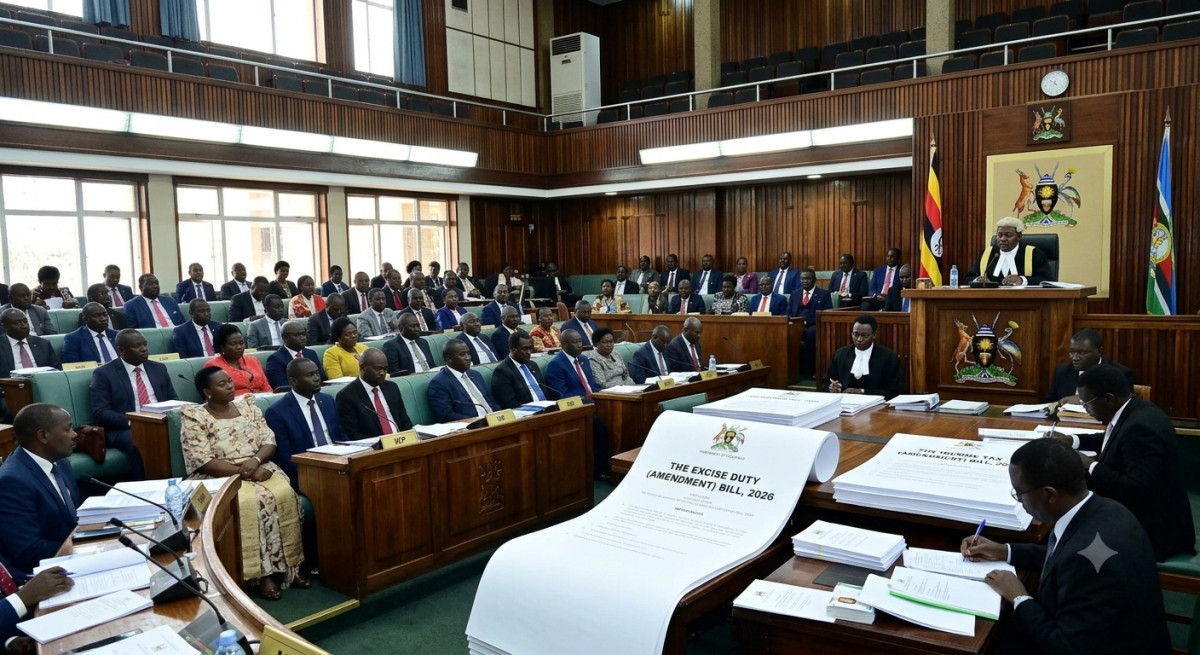
When a national budget is read, citizens naturally focus on where public money will be spent—on roads, schools, healthcare, or civil service salaries. However, the true legislative battleground lies in how that money is collected. In a major fiscal showdown, President Yoweri Kaguta Museveni declined to assent to two fundamental tax pieces: the Income Tax (Amendment) Bill, 2026 and the Excise Duty (Amendment) Bill, 2026.
By returning these bills to the Parliament of Uganda, the Executive branch ignited an essential political debate over market fairness, state revenue collection, environmental policy, and industrial protectionism. While legislative legal jargon can appear dense, this political standoff centers on concrete economic realities: how gambling winnings are taxed, how much everyday packaged items cost, and whether rapid tax changes could unintentionally destabilize Uganda’s manufacturing sector.
To understand why the Executive stepped in to block Parliament's approved measures, we must break down the constitutional mechanics, the corporate incentives, and the microeconomic impacts affecting everyday Ugandan consumers and business owners.
1. The Legal and Constitutional Framework Behind the Decision
Under Article 91 of the 1995 Constitution of the Republic of Uganda, the President is granted specific, strict powers regarding bills passed by Parliament. When a bill is presented for presidential signature, three options exist: assent to the bill, refuse assent and return it to Parliament with specific recommendations, or notify the Speaker that the bill is being held for constitutional review.
When Deputy Speaker Thomas Tayebwa officially informed lawmakers that the President had declined to sign the two tax measures, some legislators raised procedural objections, questioning whether the timeline had expired or if the bill needed to be reintroduced entirely. However, official parliamentary records confirmed that the Executive acted within the stipulated 30-day window following the bill's initial passage ahead of the 2026/2027 fiscal year budget presentation.
"The President's constitutional prerogative to return legislation is designed precisely as a final safeguard—ensuring that laws passed under political compromise in the House do not create unintended systemic vulnerabilities in the real economy."
By using this constitutional mechanism, the President effectively forced the House Committee on Finance, Planning, and Economic Development to re-examine key clauses. The primary motivation was straightforward: specific amendments passed by lawmakers risked causing tax avoidance loopholes and severe production bottlenecks for local industries.
2. The Betting and Gaming Tax Clash: Physical Casinos vs. Online Platforms
One of the most contentious elements of the returned legislation involves Clause 11 of the Income Tax (Amendment) Bill, 2026. This provision focused on how the State collects revenue from Uganda's booming gaming and sports betting industry.
What Parliament Proposed:
Lawmakers approved a proposal introducing a 15% withholding tax on net winnings generated from betting activities. However, Parliament inserted a significant exception: winnings earned from physical, land-based casinos licensed under the Lotteries and Gaming Act were explicitly exempted from this 15% withholding tax, leaving the tax levy primarily on online betting platforms and digital gaming operations.
The Executive's Objection and Market Reality:
President Museveni rejected this exemption on the core economic principle of tax neutrality. Tax neutrality dictates that a tax system should treat similar commercial activities equally, ensuring business decisions are driven by commercial efficiency rather than artificial tax advantages.
In his official communication to Parliament, the President noted that exempting physical casinos while taxing online platforms creates an uneven playing field. More importantly, it creates a dangerous avenue for structural tax avoidance and revenue leakage:
- Corporate Restructuring Risk: Gambling operators could easily shift their accounting structures, processing high-value transactions through physical casino entities to bypass withholding tax requirements.
- Revenue Loss: Government financial estimates indicated that failing to enforce a uniform 15% withholding tax across all gaming formats could result in losing tens of billions of Shillings in projected revenue for the FY 2026/2027 budget.
- Unfair Advantage: Smaller online operators or localized digital bettors would bear the tax burden, while capital-intensive, physical casino halls catering to higher-net-worth players would enjoy a tax-free haven on winnings.
By insisting on equal tax treatment, the Executive aims to protect government revenue collections while maintaining a level market standard across the entire entertainment sector.
3. The Plastics Tax Controversy: Environmental Goals vs. Industrial Survival
If the betting tax debate centers on market fairness, the disagreement over the Excise Duty (Amendment) Bill, 2026 represents a direct clash between long-term environmental protection and immediate economic realities.
| Policy Dimension | Parliament's Approved Position | President's Recommended Position |
|---|---|---|
| Excise Duty Rate | 25% or US$ 1,500 per tonne (whichever is higher) | Maintained at 2.5% or US$ 70 per tonne |
| Primary Objective | Aggressive environmental protection & anti-plastic pollution | Industrial cost stabilization & inflation control |
| Core Argument | High tax penalties force a rapid shift to eco-friendly alternatives. | Local manufacturers lack immediate, affordable plastic substitutes. |
| Economic Impact | Risks severe cost increases across consumer goods supply chains. | Protects local factory output, investments, and employment. |
Why Parliament Voted for a 25% Tax Rate:
Members of Parliament sought to take a firm stand against environmental degradation. Plastic pollution—particularly single-use packaging—causes severe drainage blockages in urban centers like Kampala, contaminates agricultural soils, and damages aquatic ecosystems across Lake Victoria and regional river networks. Proponents of the 25% tax argued that raising financial hurdles on single-use plastics would incentivize businesses to adopt biodegradable packaging materials.
Why the Executive Blocked the Increase:
The President warned that a sudden ten-fold increase in excise duty—jumping from 2.5% to 25%—was far too aggressive for Uganda's current industrial base. The economic counter-argument rests on supply chain realities:
- Lack of Local Alternatives: Uganda does not yet possess a fully developed local supply chain for cheap, commercially viable biodegradable packaging. Forcing manufacturers off plastic immediately would compel them to import expensive alternatives, driving up production costs.
- Cross-Sector Price Inflation: Single-use plastics are not merely retail shopping bags; they are essential packaging inputs for food processors, beverage manufacturers, pharmaceutical companies, and agricultural exporters. A steep tax on packaging materials translates directly into higher shelf prices for everyday household goods.
- Regional Competitiveness: If Ugandan manufacturers face inflated packaging costs, their finished goods become significantly less competitive within the East African Community (EAC) common market compared to goods produced in regional neighboring countries with lower tax burdens.
While acknowledging the necessity of environmental conservation, the President argued that ecological transitions must be gradual, giving manufacturing industries adequate runway to adapt without forcing worker retrenchments or inflationary price spikes.
4. What This Standoff Means for the Average Citizen
While debates in Parliament can seem distant, the resolution of these two tax bills directly impacts the everyday financial realities of Ugandans:
For Consumers: Rejection of the 25% plastic excise duty prevents an immediate price jump on essential packaged groceries, bottled water, beverages, and household cleaning products. It keeps basic living costs stable while the country works toward building local eco-packaging industries.
For the Gaming Sector & Bettors: Eliminating the tax exemption for land-based casinos ensures that whether an individual places a wager via a USSD mobile money code, a smartphone app, or inside a physical gaming establishment, the tax rules remain uniform. It closes loopholes that previously favored large casino operators over digital platforms.
For Government Revenue and Public Services: Re-aligning these bills ensures the Uganda Revenue Authority (URA) does not suffer structural revenue losses. Maintaining projected collections is critical for funding national infrastructure projects, healthcare expansions, and security budgets without relying excessively on external borrowing.
5. The Strategic Path Forward
The decision to return the Income Tax and Excise Duty Amendment Bills highlights the complex balancing act governing national policy. Legislative bodies naturally respond to social demands—such as curbing plastic waste or taxing luxury entertainment—while Executive authorities must manage macroeconomic metrics like manufacturing output, foreign direct investment, inflation rates, and total tax collection targets.
As the Parliamentary Committee on Finance re-evaluates both bills alongside officials from the Ministry of Finance, Planning, and Economic Development, the final legislation will likely adopt a more calibrated approach. This will likely mean implementing uniform tax rules across the entire gaming sector while establishing a phased, predictable roadmap for environmental levies that allows local industries to adapt sustainably.
Ultimately, this standoff illustrates a functioning system of checks and balances: refining policy to ensure that public revenue goals are met without choking the private sector growth driving Uganda's economy forward.
What's Your Reaction?
 Like
0
Like
0
 Dislike
0
Dislike
0
 Love
1
Love
1
 Funny
0
Funny
0
 Wow
0
Wow
0
 Sad
0
Sad
0
 Angry
0
Angry
0










Comments (1)